
Jump to a sectionA date, a potluck plan, food safety, leftovers and activities
The hardest part of hosting Friendsgiving isn’t the turkey. It’s the oven: one oven, five dishes that all need it at 4 p.m., and a guest arriving with a casserole that still has to bake for an hour.
This guide solves that and the rest of the hosting puzzle: picking a date, splitting the cooking, fitting the party into an apartment or rowhome, keeping food safe, sending everyone home with leftovers, and a few activities that keep the evening going without feeling forced.
Food-safety guidance from the U.S. Department of Agriculture; local dates checked October 29, 2026.
2026 dates to plan around
Thanksgiving is Thursday, November 26, so the most common Friendsgiving weekends are November 21–22 and November 28–29. Fine Wine & Good Spirits stores are all closed on Thanksgiving Day, so buy wine and spirits earlier in the week.
If you’d like an outing afterward, Christmas Village opens November 21 and Peddler’s Village lights up November 20. Details are in our holiday lights guide.
Plan the gathering
1. Pick the date around your guests
The weekend before Thanksgiving catches friends before they travel. The weekend after catches the ones who stayed in town, and it pairs well with leftovers. Ask for two or three possible dates rather than announcing one, and settle it at least two weeks ahead.
- When
- November 21–22 or 28–29, 2026, are the usual choices.
- Start time
- Mid-afternoon gives the oven a head start and lets people head home at a reasonable hour.
- Getting there
- Share transit options and parking notes with the invitation.
If guests will be drinking, suggest SEPTA or a shared ride home when you send the invitation. It’s easier to plan early than to bring up at the end of the night.
2. Keep the menu potluck-friendly
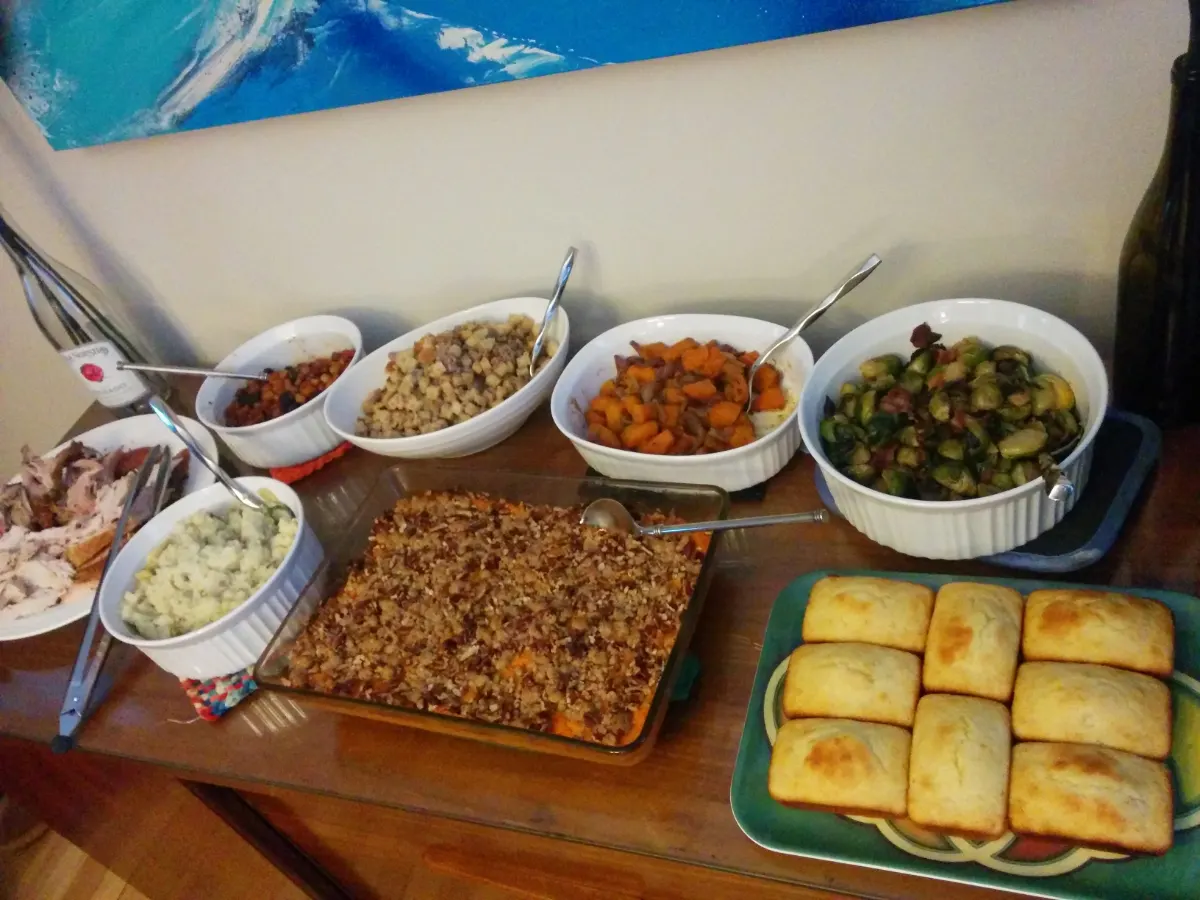
The host usually covers the main dish and the table; everyone else brings one thing. A shared list keeps you from ending up with five desserts and no vegetables.

- The list
- Main, two or three sides, a vegetable or salad, bread, dessert, drinks and ice.
- Ask early
- Allergies, dietary needs and anyone who doesn’t drink.
- Oven plan
- Ask guests to bring dishes ready to serve or to reheat briefly.
Your oven is the bottleneck. Decide in advance what needs it and when, and ask guests to tell you if their dish needs reheating. A small card next to each dish with its name and main allergens helps guests who are avoiding something.
3. Fit the party to your space
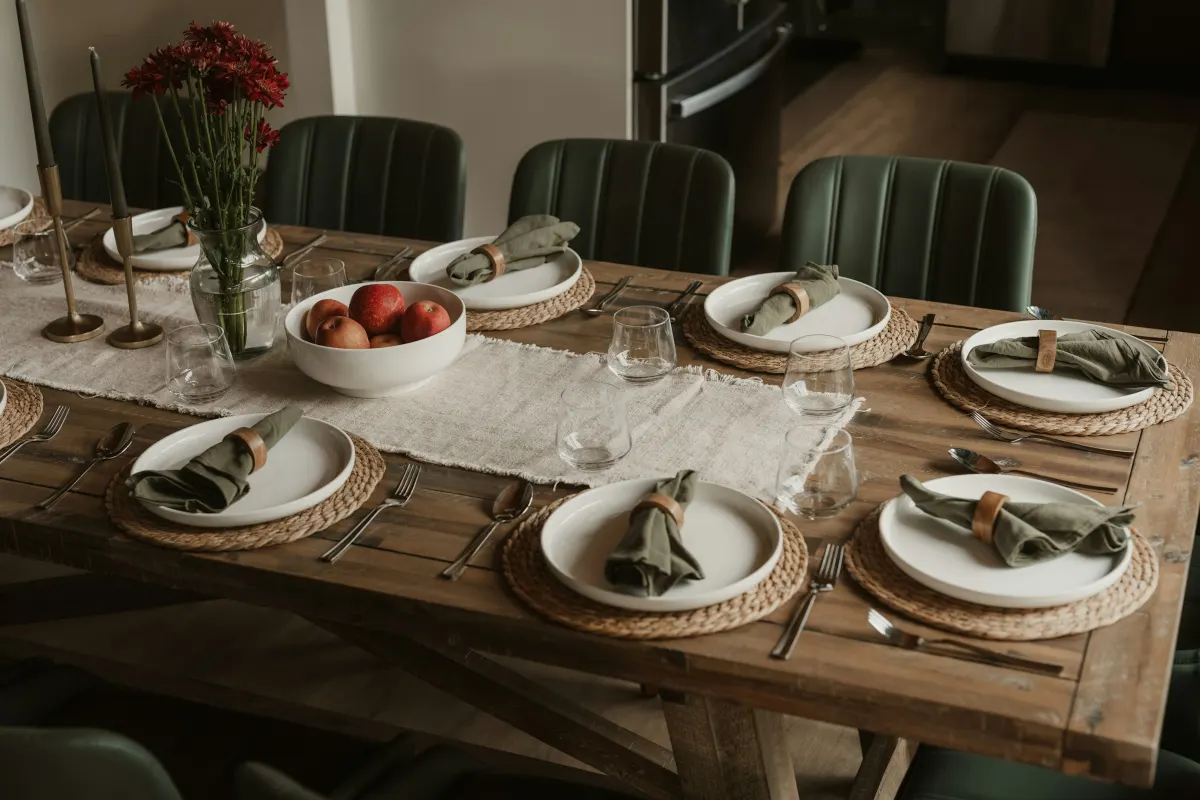
A small apartment or rowhome can host a great Friendsgiving; it just needs a plan for seats, coats and serving. Count chairs before you count guests, and borrow folding chairs a few days ahead rather than on the day.
- Seating
- One seat per guest, even if some eat on the sofa.
- Serving
- A buffet on the counter frees the table for eating.
- Coats
- One bed or rack, cleared before anyone arrives.
Renting or living in a building with shared walls? Check any guest, noise or common-area rules, and a quick note to neighbors goes a long way. For street parking, tell guests to read the posted signs carefully, since some blocks have permit or time limits.
Food safety without the fuss
4. Thaw early and use a thermometer
Most holiday food problems start with a turkey that’s still frozen on the morning of the party. The USDA’s refrigerator method needs about 24 hours for every 4 to 5 pounds, so a 15-pound bird needs three to four days in the fridge.

- Thaw
- About one day per 4–5 pounds in the refrigerator.
- Done at
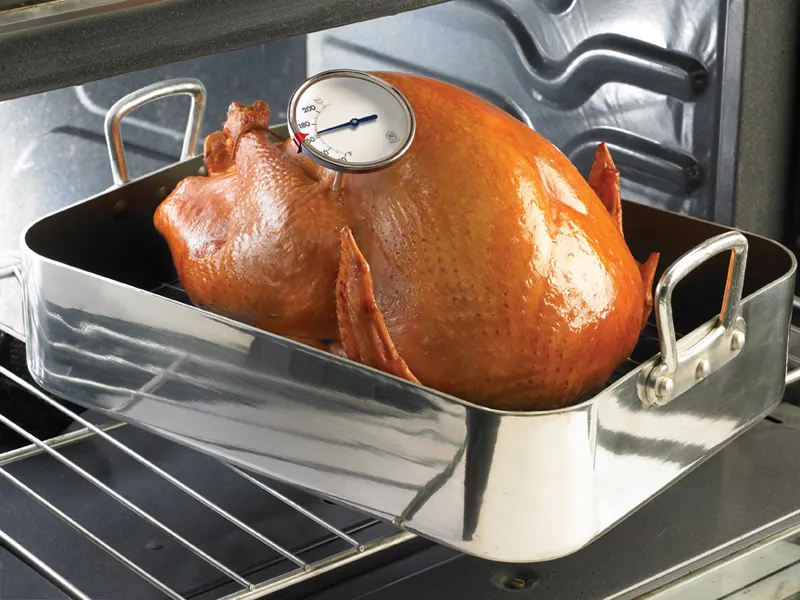
- 165°F in the thickest part of the breast, the innermost thigh and the innermost wing.
- Rest
- About 20 minutes before carving.
Don’t let the thermometer touch the bone, and don’t rely on a pop-up timer alone. If you stuff the bird, the stuffing also needs to reach 165°F in its center. See the USDA’s Safe Thanksgiving Guide for times and alternatives.
5. A leftovers station guests will actually use
Set out containers, a roll of labels and a marker before dinner, and invite guests to pack their own plate to take home. It saves your fridge and avoids the end-of-night scramble.
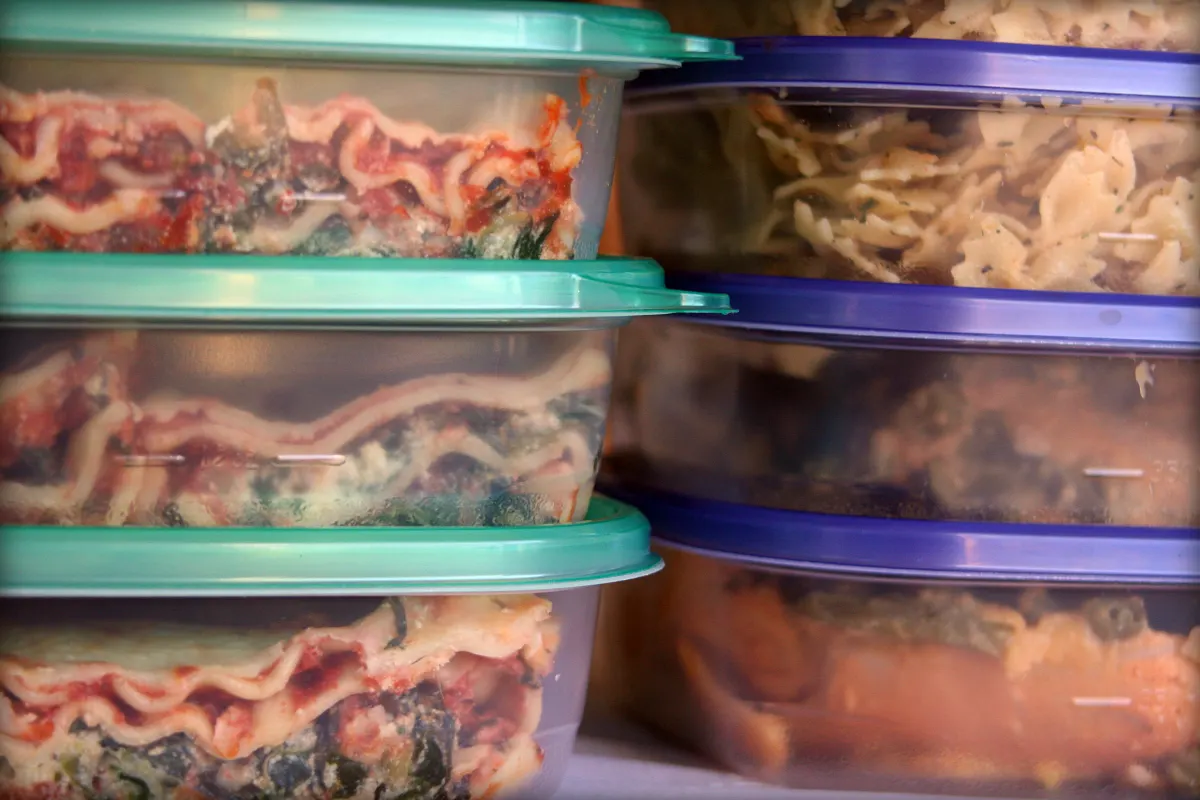

- Two-hour rule
- Refrigerate leftovers within 2 hours, or within 1 hour if it’s above 90°F.
- Fridge
- Eat within 3 to 4 days.
- Freezer
- Use within 3 to 4 months for best quality.
Divide big batches into smaller containers so they cool faster, and write the date on each label. That small step makes “is this still good?” an easy question later in the week. See the USDA’s leftovers guidance.
Activities that don’t feel forced
6. A gratitude card at every seat
Put a blank card and a pen at each place. Guests write one thing they’re grateful for, anonymously or not, and someone reads a few aloud with dessert. It’s quieter than going around the table, and nobody is put on the spot.


7. Game time after dinner
A short card or board game works for a mixed group: quick rules, lots of players, easy to join halfway through. For a group that grew up on consoles, a retro tournament with a bracket on a sheet of paper can turn competitive fast. Set it up before dinner so you’re not untangling cables at 9 p.m.
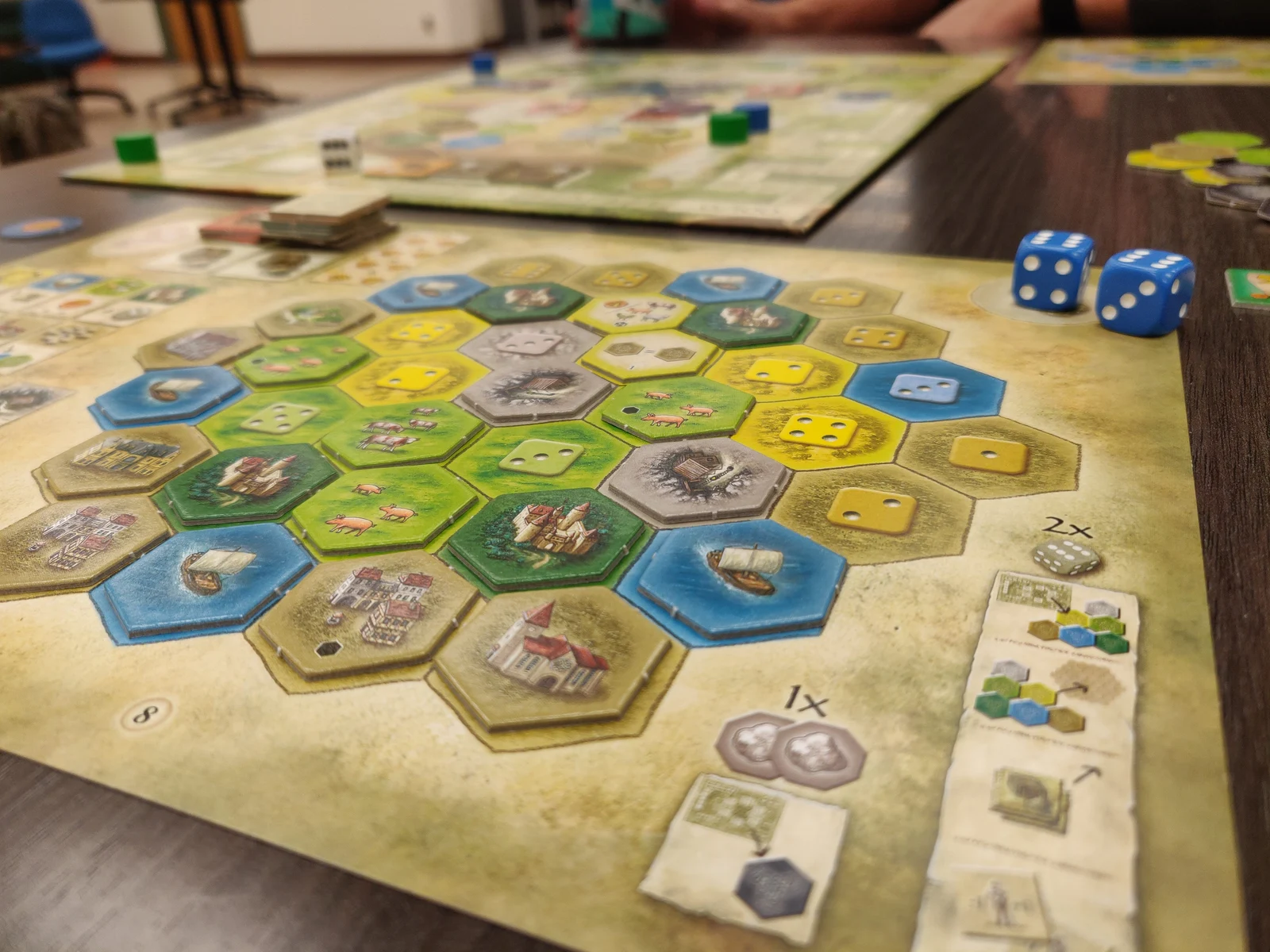

If you’d rather someone else host the games, our indoor things to do guide includes board-game and arcade options in the city.
8. A walk or a lights outing afterward
A short walk after the meal breaks up the evening and gives everyone a break from the kitchen. If your Friendsgiving is November 21 or later, holiday lights make a natural destination. Christmas Village at LOVE Park opens that day.


See our holiday lights guide for free and ticketed displays, or walking routes in the city and suburbs for a quieter stroll.
9. A recipe swap
Ask everyone to bring their dish’s recipe on a card or send it in the group chat. Collect them into one shared document afterward. It’s a small keepsake, and next year’s menu is half-planned already.

Cleanup that doesn’t take all night
Start with an empty dishwasher and an empty trash can. Set up one spot for scraping plates and another for soaking pans, so dishes don’t pile up across every counter. Put out a second bag for recycling, and line the trash can with two bags so a fresh one is ready.
When guests offer to help, give them a specific job: packing leftovers, drying, or taking out the recycling. Check your township’s or the city’s holiday trash schedule, since Thanksgiving week can shift collection days.
How this guide was made: it’s a researched planning guide, not an account of a particular party. Follow the linked USDA pages for full food-safety details.
Keep it simple: one main dish, a shared list, a plan for the oven and a way to send everyone home with leftovers. If you’re hosting in a new place, or thinking about a home with more room for next year, the Local Guide and Buying & Selling guides are good next reads.
Sources & method
Information in this guide was checked October 29, 2026. Source links appear in the text above. Dates, prices and hours can change, so confirm with the official source before you rely on them.
Photo credits and image details
These photographs were resized and converted to WebP for this website, with no crop or content changes. Source and license links are below. Dates describe the source photos, not current conditions or future events.
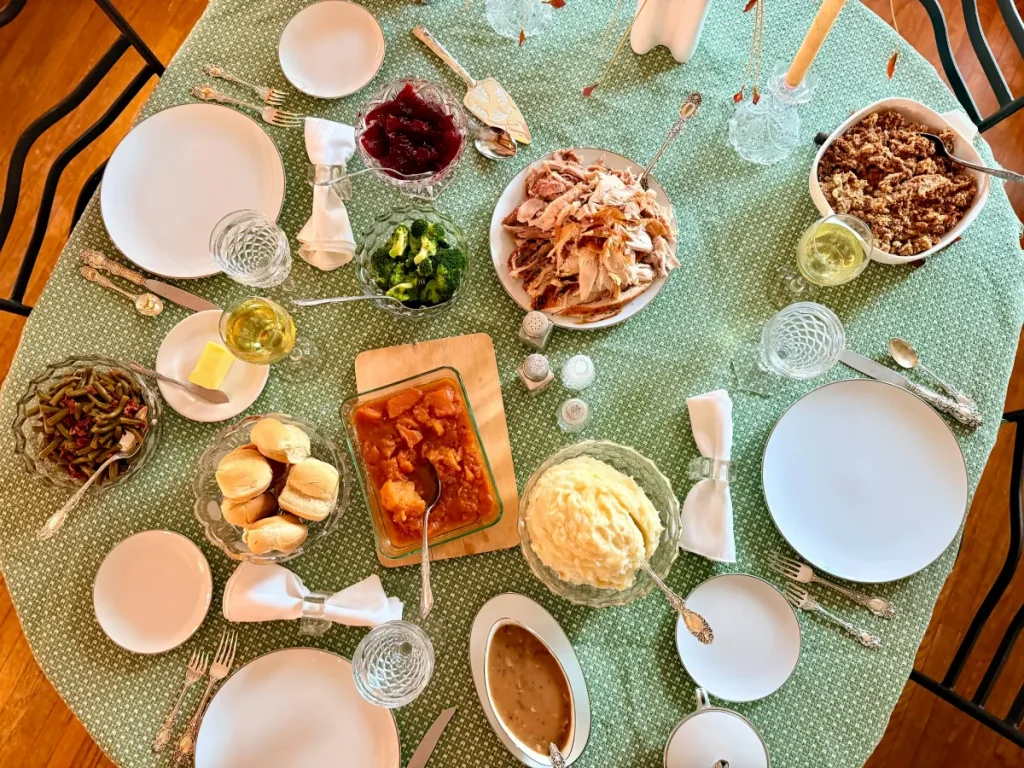
- David Todd McCarty · Unsplash LicenseA Thanksgiving table seen from above. An illustration, not a Philadelphia event.
- William J Sisti from Morristown, NJ, USA · CC BY-SA 2.0A potluck spread on a kitchen counter, November 2014. Illustration.
- Clay Banks · Unsplash LicenseA long table set for dinner guests. Illustration.
- U.S. Department of Agriculture · Public domainA roast turkey checked with a food thermometer. U.S. Department of Agriculture photo, 2011.
- Kathleen Franklin · CC BY 2.0Leftovers packed in stacked containers, 2010. Illustration.
- Missvain · CC BY 4.0A Thanksgiving place setting, November 2019. Illustration.
- Mshuang2 · CC0Board-game illustration, not Queen & Rook. Check the café for its current game selection.
- Syed07 · CC BY-SA 4.0City Hall and its holiday tree at night, December 2025.
- Kimberly Vardeman · CC BY 2.0Pumpkin pie with whipped cream, November 2010. Illustration.